

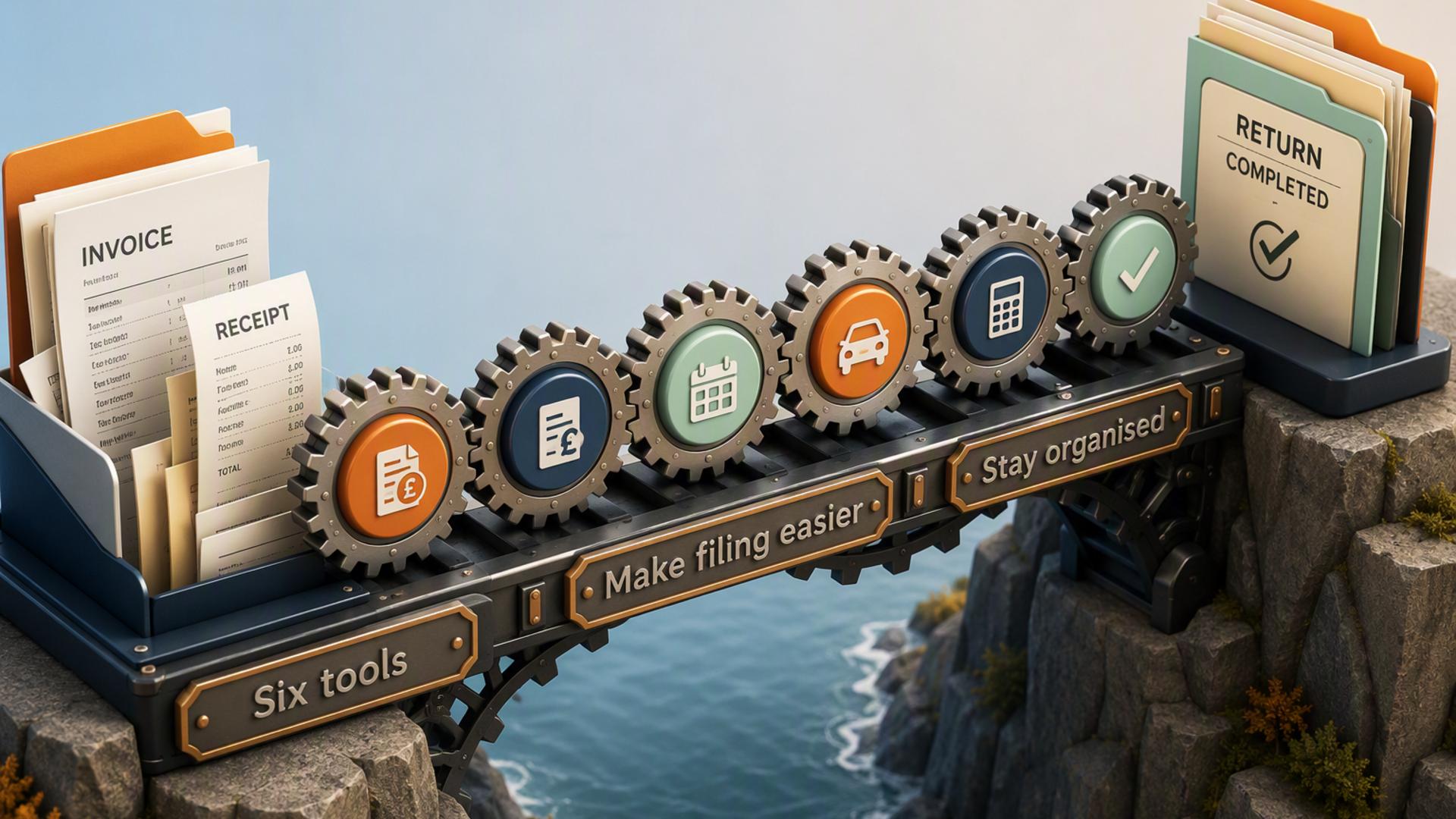
Six Software Tools That Can Materially Improve a Sole Trader’s Working Day
Operating a business independently places every responsibility on one person: winning clients, completing work, overseeing finances, dealing with administration, and remaining compliant. In the absence of suitable software, those administrative demands can steadily take time and energy away from the core work of the business.
The tools with the greatest day-to-day impact for sole traders are rarely those with the most extensive feature sets. Instead, they solve repeated operational frustrations so well that working without them quickly becomes difficult to imagine. The following six tools regularly fit that description.
1. Sage Sole Trader: Software for Accounting, Tax and MTD
For many sole traders, finance management and HMRC compliance create the most persistent underlying concern. Sage Sole Trader brings together real-time income and expense tracking, invoicing, Self Assessment figure preparation, and direct VAT return submission to HMRC within one platform.
As a result, tax does not have to become a once-a-year task demanding several days of work. It becomes an ongoing, largely automated activity that remains up to date throughout the year. With MTD for Income Tax Self Assessment due from April 2026, Sage also enables sole traders earning above £50,000 to use a compliant platform before quarterly reporting obligations begin.
Why it matters: Managing finances and tax compliance automatically across the year removes what is often the largest source of administrative concern for sole traders.
2. Otter.ai: Software for Meeting Transcription
Independent professionals working with several clients can spend substantial time in project meetings, briefing calls, and feedback discussions. Taking detailed notes while remaining engaged in the conversation is challenging, while relying on recollection afterwards can mean important details are overlooked. Otter.ai captures and transcribes conversations in real time, creating a searchable written record that can be reviewed, shared, and consulted whenever necessary.
In addition to its everyday practical value, a clear record of agreements reached during client discussions can offer valuable professional protection if an element of a project or engagement is disputed later.
Why it matters: Reliable records of client discussions strengthen delivery quality, limit misunderstandings, and offer professional protection if a dispute arises.
3. Pleo: Platform for Smart Business Spending
Business expenses are unavoidable for every sole trader. Paying for them, retaining receipts, recording them correctly, and reconciling them with accounts can create a continuing, low-level administrative workload. Pleo streamlines this through a smart business spending platform that provides a dedicated business card, collects receipt information at purchase, automatically categorises expenditure, and sends the data into accounting software without manual input.
This means business spending remains visible, documented, and ready for review at all times, rather than requiring an end-of-month reconciliation process.
Why it matters: Automated expense handling can eliminate hours of administration each month while ensuring every business expense is documented and available for tax purposes.
4. Mailchimp: Platform for Email Marketing
Maintaining visibility with former clients and warm prospects is among the most valuable activities available to a sole trader, yet it is also frequently overlooked. Mailchimp makes it easier to create a contact list, produce professional email communications, and schedule regular messages that keep a sole trader’s services and name in front of people already familiar with and trusting of their work.
A straightforward monthly email featuring useful content or recent work can generate meaningful repeat enquiries over time. Its automation features can also manage welcome sequences and follow-up emails without continued attention, supporting consistent communication during particularly busy periods.
Why it matters: Existing relationships are almost always the most cost-effective route to new work for a sole trader. Mailchimp helps maintain those relationships without substantial ongoing effort.
5. 1Password: Management for Passwords and Security
Sole traders are responsible for considerable sensitive information, including client data, financial records, contracts, HMRC credentials, and banking access. Without a dedicated password manager, they may either reuse weak passwords across accounts or face the difficulty of maintaining secure, distinct passwords for every service. Each approach introduces a real security risk.
1Password keeps credentials in an encrypted vault, creates strong and unique passwords for each account, and automatically enters them when required. For a sole trader without an IT department, it represents the single most impactful available measure for safeguarding the business and its clients from a security breach.
Why it matters: One security incident can result in serious financial and reputational consequences. 1Password is an accessible and effective security solution for sole traders.
6. Miro: Collaboration Platform and Online Whiteboard
Sole traders involved in creative, collaborative, or strategic work can repeatedly encounter the limits of explaining complex ideas through email or ordinary video calls. Miro is an online whiteboard platform through which multiple participants can collaborate visually in real time, develop ideas, organise information, structure projects, and facilitate workshops in a shared format.
When sole traders use Miro in client engagements, it can improve the quality of collaboration, reduce the amount of clarifying email correspondence, and create a more distinctive and professional approach to project delivery.
Why it matters: Stronger collaboration tools can improve client outcomes, reduce misunderstandings, and enhance professional reputation, supporting referrals and repeat business.
Frequently Asked Questions
How can these software tools be used together instead of operating independently?
The strongest software arrangements for sole traders connect tools rather than leaving them separate. Sage works with Pleo, allowing business expenditure to move automatically into the accounts. Otter.ai transcripts may be saved with and referenced alongside client files. Mailchimp contact lists can be developed from client relationships managed in other places. The objective is to use a limited set of tools that each perform a particular role well and connect where possible, rather than relying on a disconnected collection that needs manual work between systems.
Could relying too heavily on software create problems if a platform changes or is no longer available?
Established and reputable platforms such as those included here are generally stable long-term investments, especially where large user bases and subscription models provide a commercial reason to maintain and enhance the product. For most sole traders, the greater risk is often the reverse: continuing with insufficient manual processes because of hesitancy around software adoption, then carrying the continuing cost of time, errors, and missed deductions.
How can I tell whether a software tool is actually saving time rather than creating extra complexity?
A dependable approach is to measure the time required for individual tasks before and after implementation. Tasks such as receipt handling that once required an hour of monthly reconciliation, client communication requiring individually drafted emails, or meeting notes that previously needed writing up afterwards all carry measurable time costs that effective software can substantially reduce. If a tool does not deliver a noticeable improvement in time or quality during its first month of genuine use, it may be worth reassessing whether it is suitable.
Which tools should I focus on if I can currently pay for only one or two?
Accounting software should be the priority. Keeping accurate, HMRC-recognised digital records throughout the year delivers enough financial and compliance value to take precedence over other business software investments. The reduction in stress and time, together with the tax mistakes avoided, will generally create a return that exceeds the subscription cost during the first few months of use.
Is technical expertise required to set up and use these platforms?
Technical knowledge is not needed for any of the platforms listed. They are built for business owners, rather than developers, and their interfaces guide users through both setup and continued use. Most provide free trials, enabling users to test a product before making a commitment, while all offer support documentation and customer service teams for questions that may emerge during setup.